
Portable laser equipment requires fast and reliable heat dissipation within limited space and weight constraints. This air-cooling module combines C1020 sintered heat pipes, aluminum cooling fins, and a lightweight aluminum structure. The heat pipes rapidly transfer concentrated heat through phase-change heat transport, while the fins enlarge the effective surface area for forced-air cooling. This design helps reduce localized hot spots and maintain stable equipment operation.

The module consists of an aluminum frame, a heat-transfer base, C1020 sintered heat pipes, aluminum cooling fins, and integrated mounting structures.
Heat generated by laser components or high-power electronics is first transferred into the aluminum base. The embedded sintered heat pipes then transport the heat to a larger finned area. Fan-driven airflow passes through the fin channels and removes the heat from the equipment.
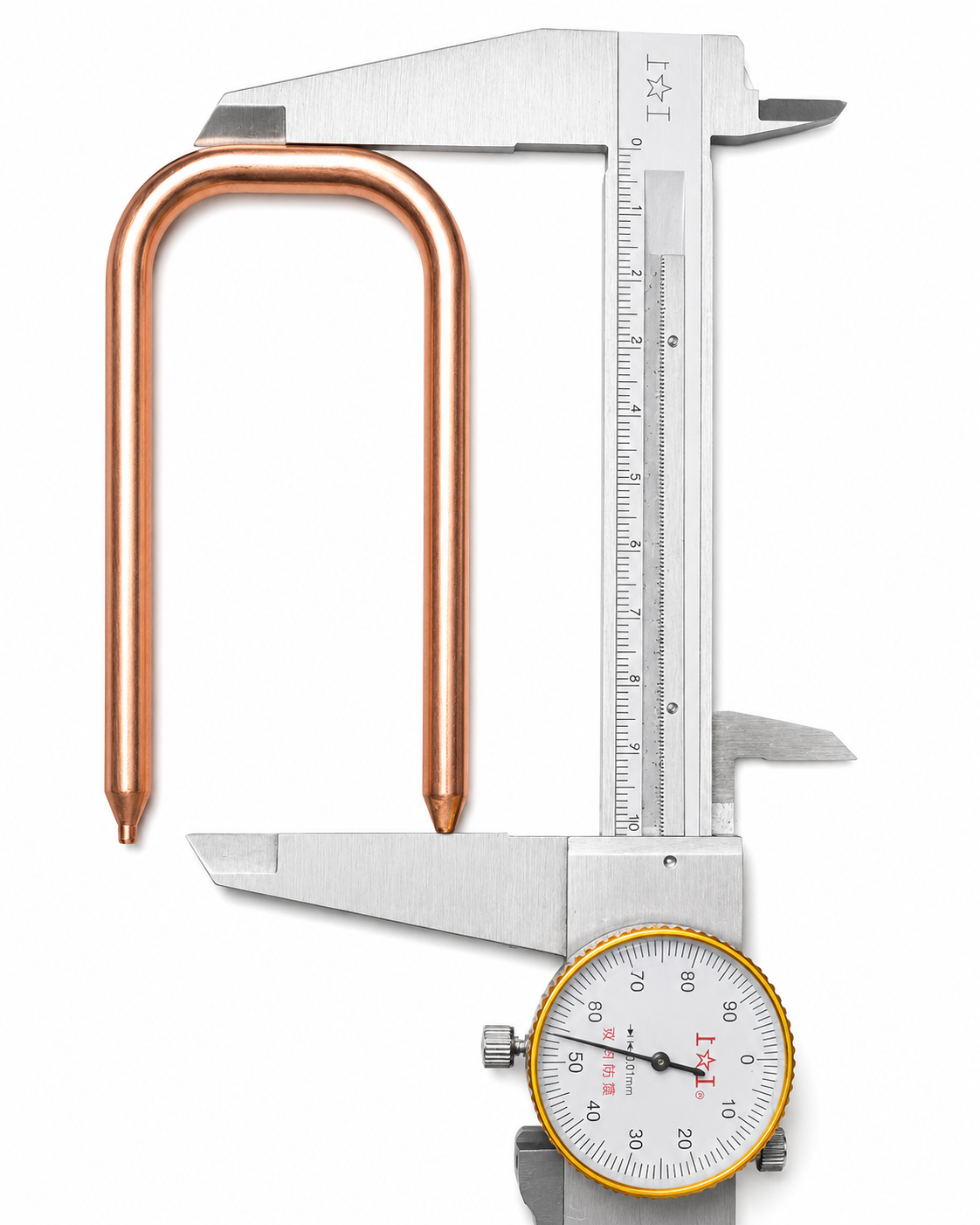
A sintered heat pipe operates through an internal phase-change cycle. At the evaporator section, the working fluid absorbs heat and vaporizes. The vapor travels to the condenser section, where it releases heat and returns to liquid form. The internal sintered wick structure then generates capillary force to return the liquid to the evaporator section, maintaining a continuous heat-transfer cycle.
Under suitable design and operating conditions, the effective thermal conductivity of a heat pipe can exceed that of solid copper by more than 50 times. It can transfer concentrated heat to the cooling area within seconds. The sintered wick provides strong liquid return capability and supports stable operation in a wide range of installation orientations.
The module improves thermal performance through two main mechanisms:
AL6063 is used for the frame, supports, and structural components. It provides low weight, mechanical stability, corrosion resistance, and good machinability. It is suitable for CNC machining, drilling, tapping, and customized mounting features.
AL1100 offers good thermal conductivity and formability. It can be used for heat-transfer plates, cooling fins, covers, and stamped components, supporting both thermal performance and efficient volume production.
C1020 copper is used for the heat pipe envelope, while the internal structure contains a sintered wick and working fluid. Unlike solid copper parts or hollow copper tubing, a heat pipe does not rely only on metal conduction. It transfers heat through evaporation, vapor flow, condensation, and capillary liquid return.
The combination of aluminum structures and sintered heat pipes improves long-distance heat transport and surface temperature uniformity without the weight and cost of an all-copper assembly.
The fin structure must be matched with the fan performance and the internal airflow path of the equipment.
Narrower fin spacing increases the available cooling surface but may also increase airflow resistance. Wider spacing reduces pressure drop but provides less surface area. The spacing should therefore be designed according to airflow, static pressure, environmental dust, and available space.
Fin height affects the total heat-transfer area and overall module size. Fin thickness must balance thermal conduction, structural strength, and manufacturing consistency.
Fan airflow should pass smoothly through the fin channels. Brackets, cables, and enclosure structures should be positioned to minimize blockage, recirculation, and stagnant airflow zones.
Heat pipes should be positioned close to the main heat sources and routed according to heat-load distribution and the available fin area. A properly designed layout distributes heat more evenly across the fins and reduces surface temperature differences.
Typical manufacturing processes include:
CNC machining controls the heat-contact surface, mounting holes, flatness, and critical assembly dimensions. Stamping and bending are suitable for fins, covers, brackets, and repeatable structural parts.
Key manufacturing controls include:
Any significant gap between the heat pipe and the surrounding aluminum structure can increase interface thermal resistance and reduce heat transfer to the finned area.
The heat pipe finned air-cooling module is suitable for equipment with strict requirements for space, weight, and maintenance.
Key advantages include:
The module can be used in:
The C1020 sintered heat pipe finned air-cooling module combines phase-change heat transport with forced-air convection. The sintered heat pipes rapidly transfer concentrated heat to a larger cooling area, while the aluminum fins increase the surface area available for airflow heat rejection.
This solution is suitable for portable laser equipment requiring compact dimensions, low weight, stable thermal performance, and simple maintenance. USUSTK provides customized module design and manufacturing based on heat load, heat-source distribution, available space, fan specifications, airflow conditions, and assembly requirements.


